Forecasts point to the market for plant- and cell-based meat alternatives exploding over the next decade, largely because of the sustainability claims companies make when marketing these food products. But while it’s true that diets that include more plants and fewer animal products (especially beef) have climate benefits, burgers and nuggets engineered and processed to mimic meat have different environmental impacts than a bowl of rice and beans. And there’s been very little research so far to investigate what those impacts are and how they actually compare to meat from farmed animals. In this episode, Raychel Santo, a senior research program coordinator at the Johns Hopkins Center for a Livable Future talks joins host Lisa Held to discuss her new study that ‘provides the most comprehensive review to date of the greenhouse gas footprints, land use, and blue (i.e., irrigation) water footprints of plant-based substitutes and cell-based meat.
Image courtesy of @likemeat on Unsplash.
Heritage Radio Network is a listener supported nonprofit podcast network. Support The Farm Report by becoming a member!
Farm Report: Live Panel Discussion with Young Farmers Coalition
October 24, 2024
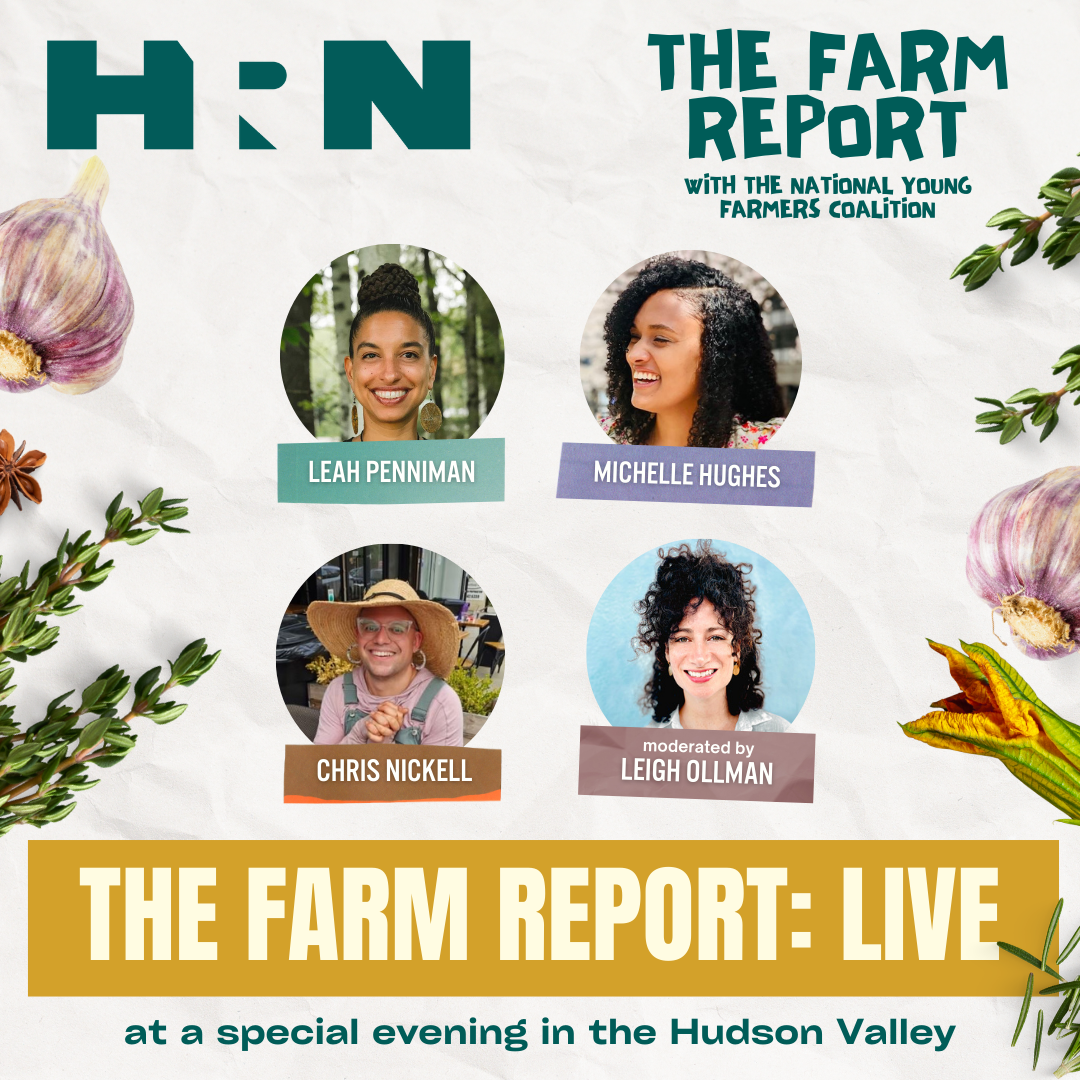
The Farm Report: Live! In collaboration with HRN and the National Young Farmers Coalition, Following a screening of the documentary "Common Ground" Host Leigh Ollman moderates a spirited conversation about the future of farming with guests Michelle A.T Hughes, Chirs Nickell and Leah Penniman.
Chris Nickell (Finca ...
Access to land is the number one challenge facing the next generation of farmers in the US. Centuries of discrimination and land theft have put this resource out of reach of farmers who are Black, Indigenous, and People of Color. Everyday in the US we lose 2,000 acres of viable farmland to development. With millions of acres on the verge of ...
Episode 4: What’s the Future of Urban Agriculture?
February 14, 2024
Despite an increasing number of farmers growing food in cities urban agriculture wasn't acknowledged in the farm bill until 2018. Lisa Held, journalist with Civil Eats and former Farm Report host provides the scoop on how the Farm Bill will impact the future of urban ag.
Melissa Metrick and Wythe Marschall, co-hosts of HRN's Fields ...
The nutrition title was first included in the 1973 farm bill. It's projected to make up 84% of total Farm Bill spending, with most of the funds going to SNAP. That's because the program helps more than 40 million low-income individuals provide food for their families each month. Some of those people are farmers. In this episode, we talk to ...
Episode 2: Climate and Water Action for the Next Generation
January 31, 2024
Farmers are now dealing with the impacts of the climate crisis on a daily basis. Experts predict weather events including droughts and flooding will only get worse. Young and beginning farmers, especially BIPOC farmers, are feeling those impacts the most. Are there opportunities to advance water and climate action and justice through the 2024 ...
Why should our next generation of farmers - and just about everyone who eats - care about the farm bill? Celize Christy, an Organizer at HEAL Food Alliance explains the basic details on what's in the legislation, how it gets written, and how it impacts you. Then, Young Farmers' Policy Campaigns Co-Director Vanessa Garcia Polanco lays out the ...
Announcing “The Farm Report: A Farm Bill for the Next Generation”
January 17, 2024
Join us for a special series of The Farm Report in collaboration with The National Young Farmers Coalition that's all about The Farm Bill. Tune in to hear from farmers, policymakers, organizers, and food advocates about all the ways the farm bill directly impacts our lives - whether we realize it or not. We'll break down farm policy and talk ...
Humans have used fermentation to preserve crops and add flavor and health benefits to their diets for thousands of years. Since 2015, Sarah Conezio and Isaiah Billington have been putting their own stamp on that age-old tradition with Keepwell Vinegar. Together, they partner directly with small, organic farms to turn apples, ginger, and ...