Podcasts What Doesn't Kill You

The Business of Farming with Tom Philpott

Published Date: October 6, 2013
Episode: 86

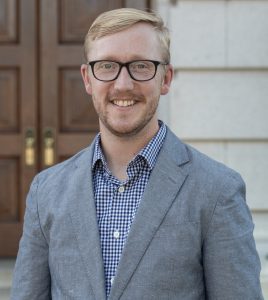
Tom Philpott is a food and agriculture correspondent for Mother Jones and the cofounder of Maverick Farms, a center for sustainable food education in Valle Crucis, North Carolina. For five years, Philpott served as a columnist, food editor, and senior food writer for the online environmental site Grist. His work on food politics has appeared in The New York Times, Newsweek, Orion, OnEarth, Gastronomica, and the Guardian, and he has been interviewed by Terry Gross on Fresh Air. Before moving to the farm in 2004, Philpott worked as a financial journalist in Mexico City and New York, most recently writing daily dispatches on the stock market as equity research editor for Reuters.com. In 2011, Utne Reader named him one of “25 Visionaries Who Are Changing Your World.” On this special episode of What Doesn’t Kill You, Phil talks about the use of corn and soy as fuel additives, and how commodity farming creates various issues in the food business today, including raised costs and environmental effects. Given the dwindling of the farm population, Phil also talks about what he sees as the way forward for farmers today, and how and if the new farm bill will deal with these current issues. Tune-in to learn more about these problems, and how to continue staying involved in these important matters today through motherjones.com, or connecting with Tom himself. This program has been sponsored by Heritage Foods USA.

“Both the House and the Senate in the past year have passed a version of the farm bill that is shifting to subsidized insurance. It’s this crazy subsidy system that will continue this chain of farmers just getting by.” [26:10]

— Tom Philpott on What Doesn’t KIll You
The Business of Farming with Tom Philpott

Latest Episodes

Rethink Food, Saving Food From Landfill

Rethink Food, Saving Food From Landfill

Founder and CEO Matt Jozwiak of Rethink Food, joins to discuss how he works with a variety of partners to re-purpose discarded food into wholesome, culturally appropriate meals for the underserved. Photo Courtesy of Clay Williams. Heritage Radio Network is a listener supported nonprofit podcast network. Support What Doesn't Kill You by ...
Herbicide Drift and Its Impacts

Herbicide Drift and Its Impacts

Prairie Rivers Network has published the results of a 6 year study on the impacts of herbicide drift in Illinois, and its not a good picture. Herbicide drift isn't confined to agricultural fields. They float right into our backyards, schoolyards, parks, and natural spaces. Herbicide drift is having a major impact on trees and naturally ...
Courts Are Beginning to Address Water Quality Issues in Farm Belt

Courts Are Beginning to Address Water Quality Issues in Farm Belt

Journalist Keith Schneider reports on some groundbreaking cases in Michigan and in Federal Court addressing the pollution caused by CAFOs and the spreading of manure across famrland that winds up in our water system. Heritage Radio Network is a listener supported nonprofit podcast network. Support What Doesn't Kill You by becoming a ...
Herbicide Drift and Its Impacts

What Technologies Are Available for Cleaning up PFAS?

Dr. Thomas Boving, Chair of The Department of Geosciences joins to discuss what and how we can address the contaminations of our waterways, from lakes and streams to groundwater. With agrochemicals, PFAS and other toxic additives, American waterways are challenged like never before. Dr. Boving has worked here and abroad to address challenges ...
Why Isn’t the USDA Taking Bird Flu More Seriously?

Why Isn’t the USDA Taking Bird Flu More Seriously?

Avian Influenza, AKA bird flu is just a few mutations away from becomimg a much bigger deal for humans. With the pandemic just in the rear view mirror, teh news that H5N1 has moved from bird populations to dairy herds to humans should be a red alert. Curiously, the USDA seems relatively unconcerned. Gail Hansen, Public health veterinarian and ...
Protecting Our Streams, Protect Our Water Supply

Protecting Our Streams, Protect Our Water Supply

John Rumpler, Clean Water Director of Environment America; Research and Policy Center, explains how protecting our "ephemera" streams has a major impact on our water supply. With last years Supreme Court Ruling excepting "ephemeral" streams from the Clean Water Act, and laying them open to polluters. It will take a concerted effort to restore ...
Wisconsons Water Is Laden With PFAS, Republicans Want to Give the Polluters Immunity

Wisconsons Water Is Laden With PFAS, Republicans Want to Give the Polluters Immunity

Erik Kanter, President of Clean Wisconsin joins to explain how republicans are withholding funds for clean up until the legislature passes a bill immunizing polluters from prosecution for polluting the drinking water of hundreds of thousands of Wisconsinites. Heritage Radio Network is a listener supported nonprofit podcast network. Support ...
Herbicide Drift and Its Impacts

Who Owns Our Water? Who Is Getting to Sell It? Gambling in Water Futures Is Real.

New legislation introduced by Senator Elizabeth Warren and Representative Ro Khanna would put the kybosh on trading in water futures. Will it succeed? Mary Grant, Director of the Public Water for All initiative at Food and Water Watch joins to discuss this legislation, and other issues affecting our water supplies. Heritage Radio Network ...
No results found.

SERIES
SUBSCRIBE

PARTNER